
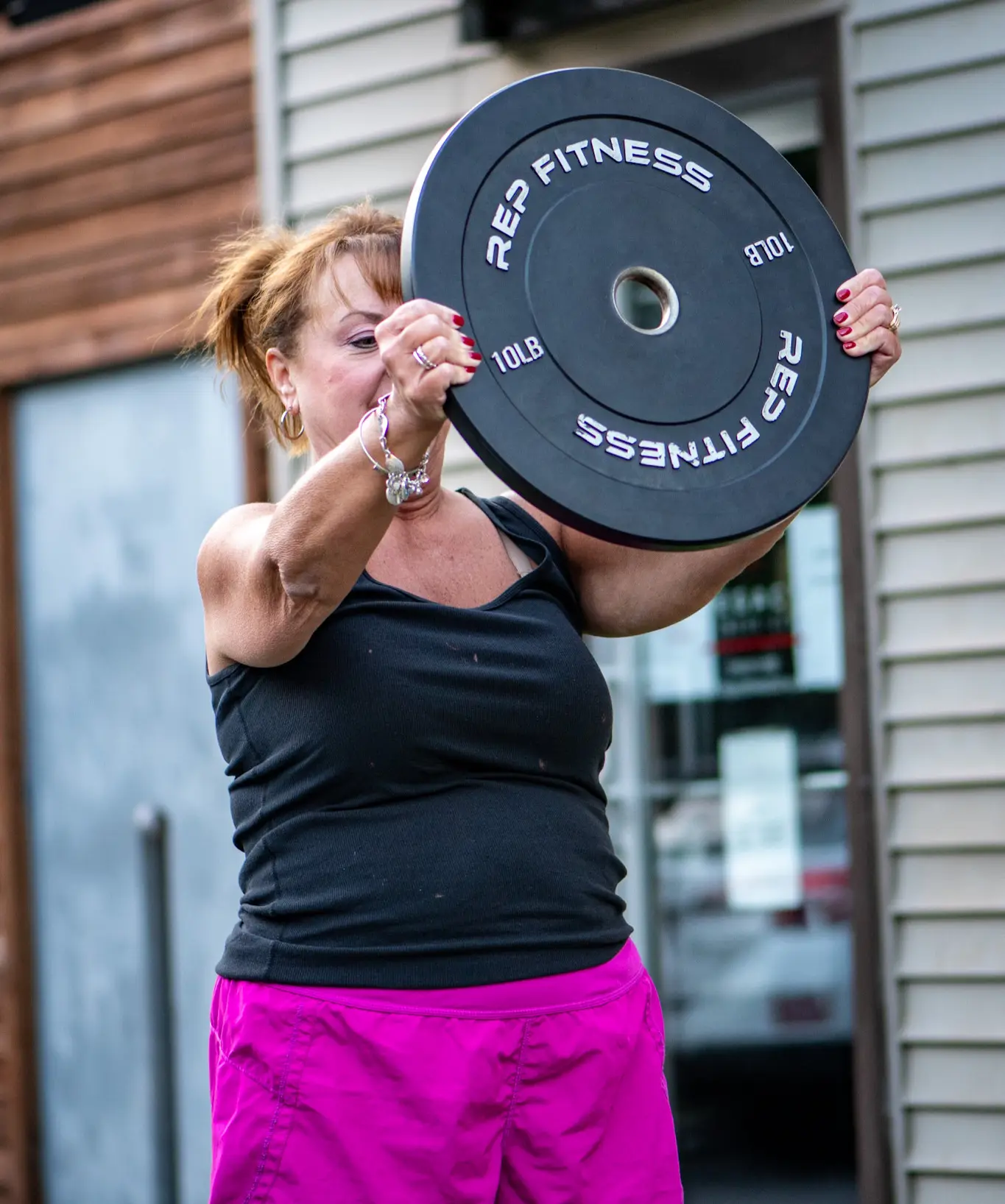
The short, honest answer: yes, and it matters more after 50
Strength training after 50 is not just safe when done sensibly — it's one of the highest-return things you can do for how you feel and how long you stay capable. The evidence is consistently the same: resistance training builds muscle and bone density, improves balance and joint health, and protects your independence. The fear that keeps most adults from starting — "it's too late," "I'll get hurt," "this is for younger people" — is exactly the fear we hear on the first day, and it's almost never founded for someone coached properly.
At Aspire, our coaches have trained clients from age 6 to age 90. A 75-year-old member whose story is on our homepage started personal training here well after retirement, focusing on balance, strength, conditioning, and energy. That's not a special-case story; it's the demographic the club is built around.
What strength training actually does for you after 50
After 50, the body responds to the same principle it did at 20 — load that's challenging but manageable, recovered properly, repeated over time. But the payoff skews heavier toward daily life: getting up off the floor with a grandkid, carrying groceries, trusting your feet on ice or stairs, and staying in the trail or the garden without a setback.
Done with real movement screening, it also addresses the weak links you can't feel yet — the imbalances that show up as a back twinge or a bad knee down the road. This is where Aspire differs from a typical gym: progress isn't guessed. It's measured and retested, so you see your real fitness age and watch it change.
How to start as a complete beginner (or after a long break)
Start slower than you're tempted to, and let a coach scale everything to where you are today — not where you think you should be. There's no fitness test to earn your way in, and the first session is an assessment, not a gauntlet.
A sensible starting plan looks like: a movement screen so nothing is loaded on a weak link; a coach using loads you can handle with good form; a clear, repeatable two-to-three-day rhythm; and retests every few months so you and your coach both see what's actually changing.
What Aspire's coaches bring to it
Your plan is built off the Total Metabolic Analysis — a VO2 max test, a 3D body-composition scan, a resting metabolic rate test, and a functional movement screen. That means your program starts from your real numbers, not a best guess or a template. Classes like Every Day Strength are coached, scaled, and built for real life. Silver Sneakers and Renew Active are accepted at the front desk.
And you don't have to decide anything up front. The free trial's first step is that assessment, so you can see your own numbers, build a starting plan, and decide with real information instead of a sales pitch.
Your coach has trained clients from age 6 to age 90. You will not be the outlier — you'll be the point.
Where this leaves you
See your real starting point, free
The kindest way to start after 50 is with data instead of guesswork. Aspire's free trial begins with the Total Metabolic Analysis — you walk away with your actual numbers and a starting plan, no pressure, no commitment yet.