
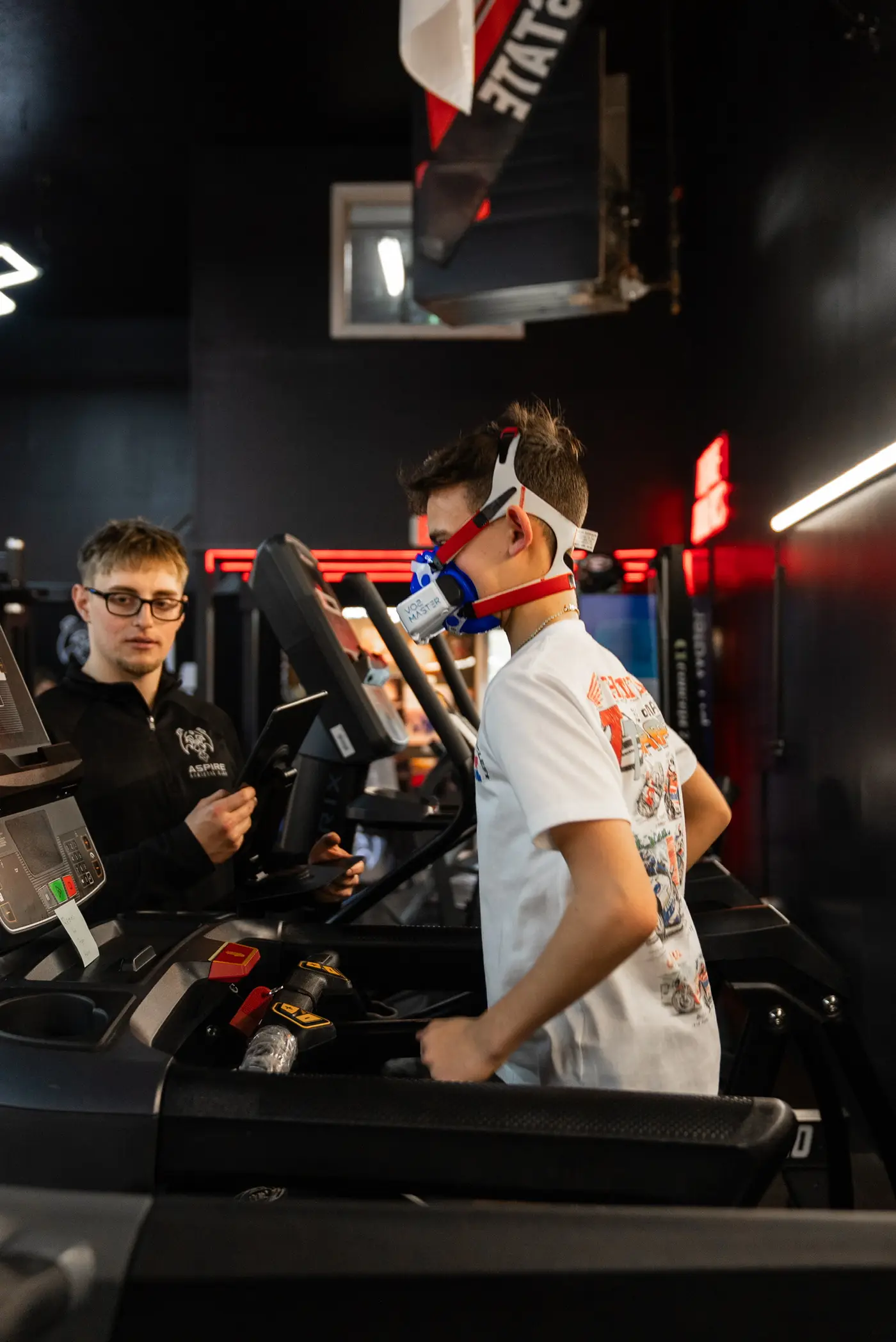
The number most people have never tested
If you asked most people what number matters most for their health, they'd say their weight. Maybe their blood pressure. Maybe cholesterol. I'd argue there's a number that matters more than all of them combined — and most people have never even had it tested.
It's called VO2 max, and it might be the single best predictor we have of how long you're going to live, and more importantly, how well you're going to live.
What VO2 max actually is
VO2 max is a measure of how much oxygen your body can take in and use during hard exercise. In plain terms: it's how efficiently your heart, lungs, and muscles work together to fuel you when you're pushed to your limit.
The higher your VO2 max, the more capacity you have. And that capacity shows up everywhere — climbing stairs without getting winded, keeping up with your kids or grandkids, recovering faster from illness, and yes, adding years to your life.
Why it's getting so much attention right now
Researchers have been tracking VO2 max against longevity for years, and the data keeps saying the same thing: low cardiorespiratory fitness is one of the strongest predictors of early death — stronger than smoking, stronger than diabetes, stronger than high blood pressure. People in the bottom percentile of fitness carry a dramatically higher risk of dying early than people in the top percentile.
That's not a small edge. That's one of the most powerful levers you have over your own healthspan, and it's one you can actually control.
The part that matters: it's trainable
VO2 max isn't fixed. It's trainable. It doesn't matter if you're 25 or 65 — you can improve it, and the payoff compounds over time.
This is exactly why we brought VO2 Master testing into the gym. It's not about chasing a number for the sake of a number. It's about knowing where you stand today, so we can build a plan that actually moves the needle — and then retesting down the road to prove it's working. There's nothing like watching someone see their own progress in black and white.
How you actually build it
Improving VO2 max doesn't mean living on the treadmill. The most effective approach blends zone 2 training (steady, moderate-intensity cardio that builds your aerobic base), interval work (short bursts of high-intensity effort that push your ceiling higher), and strength training (because more muscle means more demand for oxygen delivery, and a stronger heart to meet it).
This is the same principle we preach with everything else at Aspire: it's not cardio or strength. It's both, working together, built around where you are right now.
Your weight is a number. Your VO2 max is closer to a window into your future — how independent you'll be, how much energy you'll have, how many more years you get to spend doing the things you love.
Where this leaves you
If you don't know your number yet, that's the first step.
The Total Metabolic Analysis — VO2 max, 3D body scan, resting metabolic rate, movement screen — is Day One of Aspire's free trial. Come find out where you stand, and let's build from there.